



The new SHARP METAL white paper: dry connections for ribbed floors
Experimental testing, analytical calculations and FEM modelling: five key findings from the new Rothoblaas technical paper
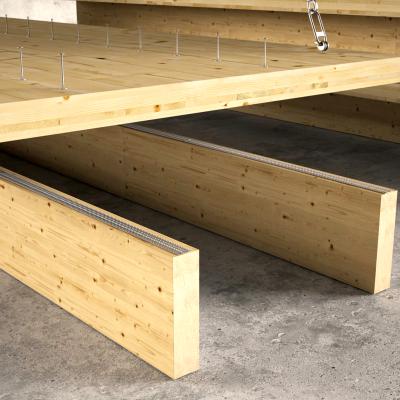
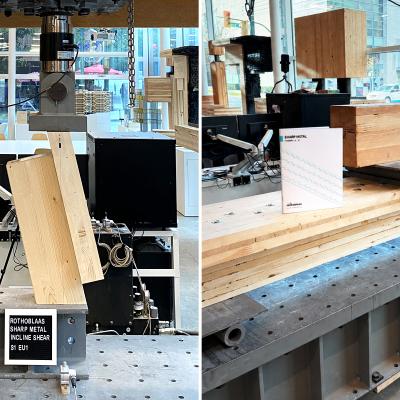
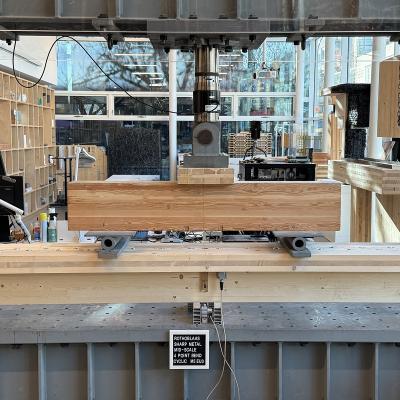
The new white paper dedicated to SHARP METAL is now available. SHARP METAL is a timber connector that uses friction-enhancing technology originally developed for the automotive sector. Adapted for structural timber applications, it is now certified under ETA-24/0058. The new white paper and accompanying test report go one step further, linking the local properties of the connector to the overall behaviour of a complete ribbed floor, from testing through to structural design.
Both documents address the same question: can adhesive bonding be replaced by a dry mechanical connection without significantly compromising floor performance or substantially increasing the amount of timber required? The main finding of the white paper is not that SHARP METAL and adhesive bonding are mechanically equivalent at the individual connection level. The most significant result is that, in the configurations analysed, the performance gap narrows when considering the complete floor structure, leading to near-equivalent design performance for the overall system.
The new technical material effectively brings together experimental testing, analytical comparisons in accordance with Eurocode 5, and FEM modelling. It is intended for timber and ribbed floor manufacturers looking to simplify their production processes, timber construction companies without a dedicated bonding line, and designers seeking structured data for their calculations. The test report, documenting the experimental campaign, and the white paper, translating the results into design guidance, are now available to consult. Here is a preview of the findings.
Five key findings from the white paper
1. From ETA to complete floor behaviour
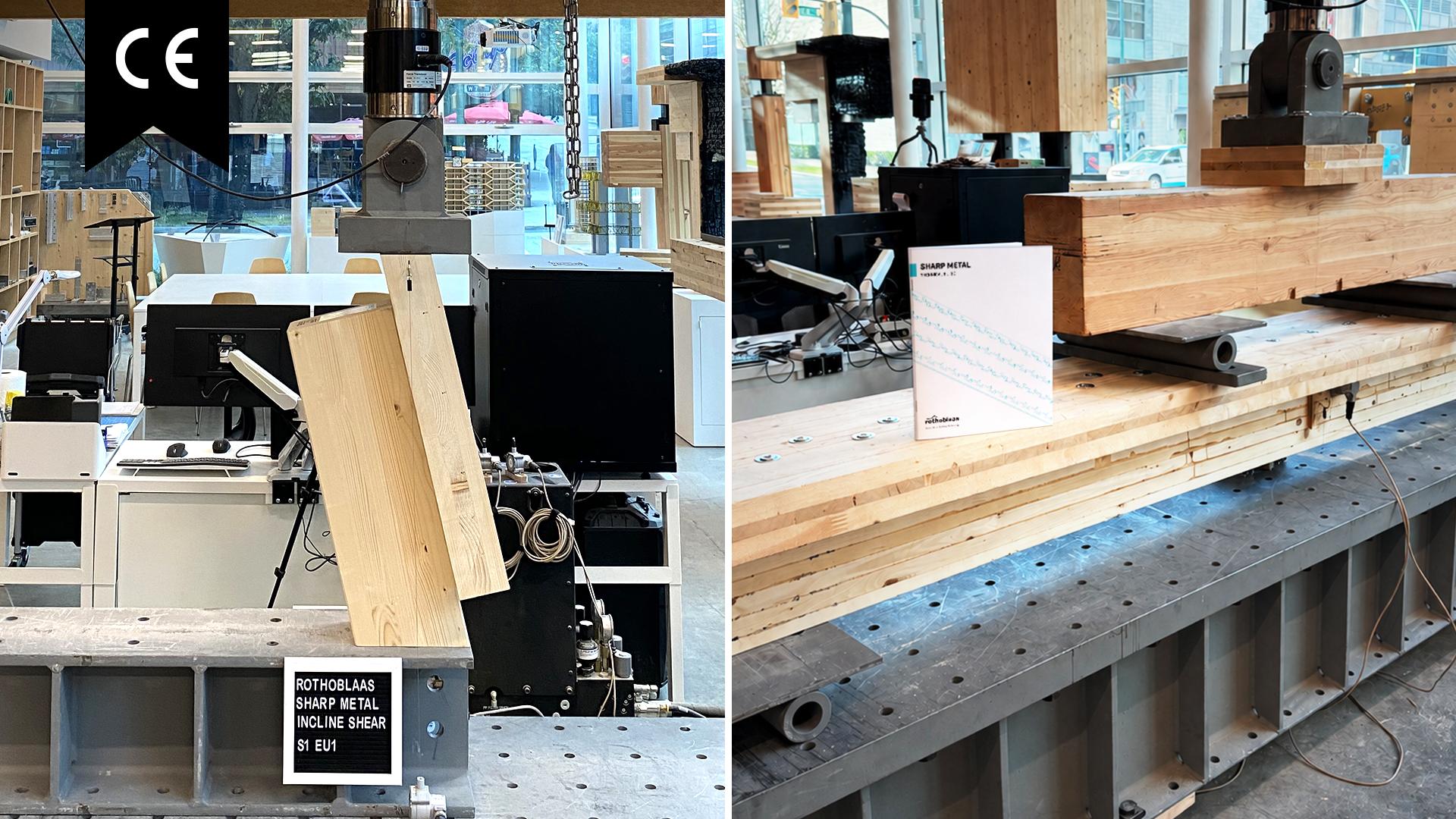
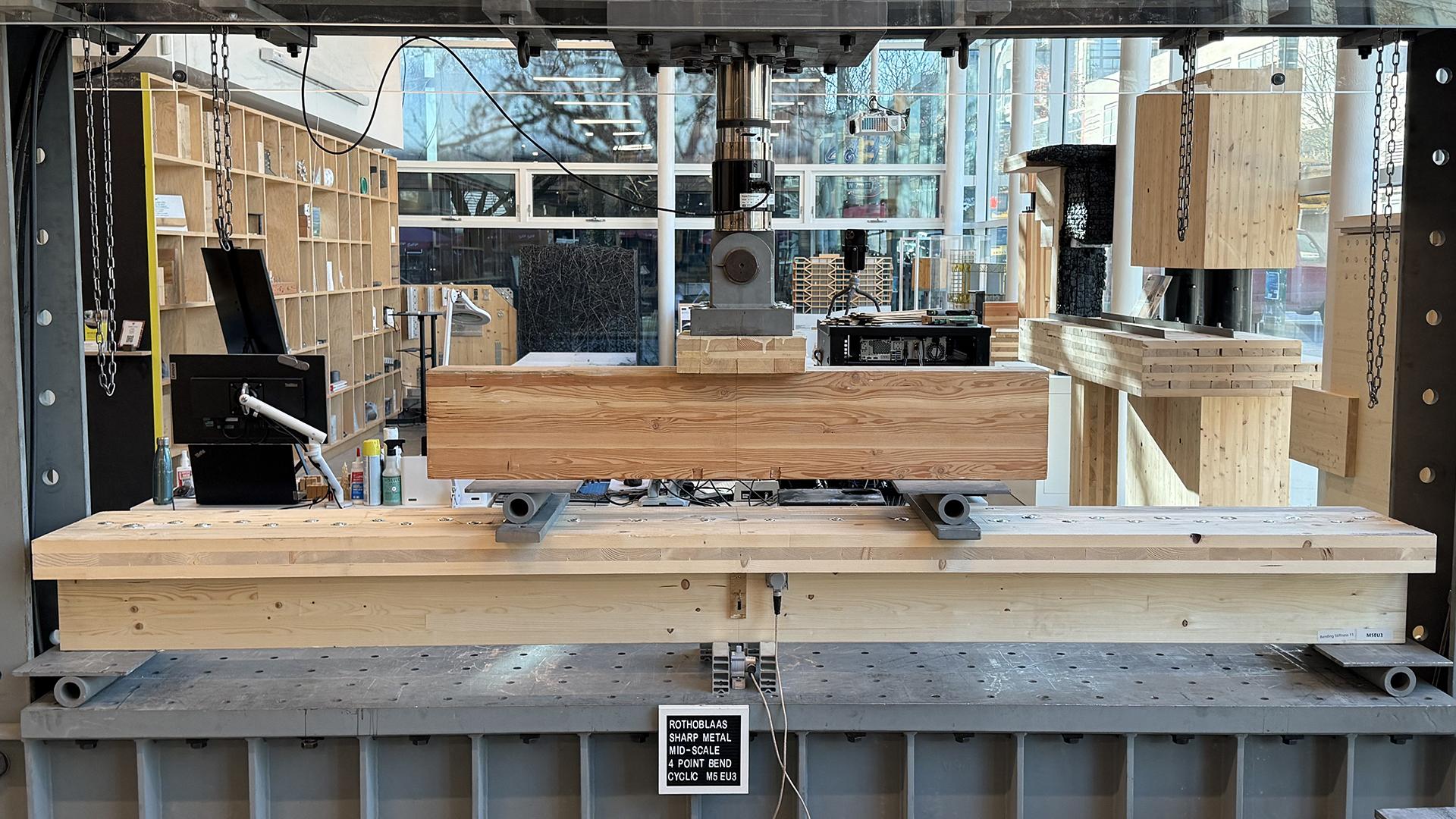
The connector’s ETA certification, obtained in 2025, proved to be an excellent starting point for a new phase of analysis. The white paper and test report now show how SHARP METAL performs when used in a ribbed floor, through local shear tests, four-point bending tests on ribbed elements approximately 3 metres long, and semi-cyclic tests on European and North American timber specimens. The connection performance declared in the ETA is thus linked to the response of the entire structural system.
2. Scale changes the comparison
At local level, adhesive bonding remains the stiffer connection. However, in tests on medium-scale ribbed elements, the overall response is influenced by the geometry of the cross-section, the stiffness of the CLT panel and rib, the span and the effective width. As a result, the local difference is not proportionally transferred to the stiffness of the entire floor. This finding challenges the most common objection without denying the superior local stiffness of adhesive bonding.
3. Close to adhesive bonding under service conditions
At deformation levels representative of the serviceability limit state (SLS), SHARP METAL achieves approximately 80% higher loads than the screws-only solution and comes within around 16% of adhesive bonding, based on the load measured at a specified deformation in the configurations tested. These figures are not universal ratios that can be applied to any floor. They do, however, show that within the deformation range governing the design, SHARP METAL provides a response much closer to adhesive bonding than to a screws-only connection.
4. Minimal impact on timber volume
The white paper compares 20 design configurations, with spans ranging from 6 to 12 metres, CLT floor structures from 60 to 120 mm thick, and ULS/SLS and vibration checks. In 11 of the 20 configurations, the same standard rib section can be maintained, while the remaining 9 require just one additional 40 mm layer. The average increase in timber volume is approximately 2%, with a maximum of 7%. These figures help answer the question that concerns designers most: “Will I need to use much more timber?”
5. Three converging lines of evidence
The conclusions of the white paper are not based on a single test, but on a combination of experimental testing at different scales – from local connections to medium-scale ribbed elements – analytical design according to Eurocode 5, and FEM modelling. The mean stiffness values declared in the ETA were also compared with two independent experimental datasets. For designers, this means predictability; for manufacturers, it confirms that the product has been assessed as a component, as a system, and through calculation models.
An additional advantage in the factory and on site
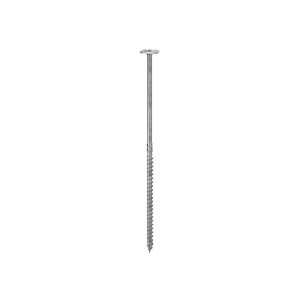
In addition to the structural performance data, the characteristics of the SHARP METAL system offer practical benefits for production. After assembly, a bonded floor must be temporarily stored and cannot be moved until the adhesive has developed sufficient strength under the temperature and humidity conditions specified by the certified process. With SHARP METAL, there is no need to wait for the adhesive to cure, no surface preparation is required to ensure adhesion, and there is no risk of adhesive leaking onto exposed ribs. Installation – using industrial pressing or TBS MAX screws – is possible both off site and on site. CLT panels and glulam ribs can be transported separately, making them easier to stack and simplifying logistics, while the production of ribbed floors becomes feasible even for timber contractors and prefabricators lacking a dedicated structural bonding line.
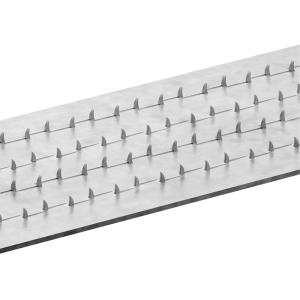
In short, SHARP METAL was not developed to outperform adhesive bonding in terms of local stiffness, but rather to demonstrate, with supporting data, that a ribbed floor can achieve the required performance through a more flexible process, without the production, logistics, and temperature and humidity control issues typically associated with adhesive bonding.
The full white paper and experimental test report are now available for consultation. Download them to explore the results in more detail, and contact the Rothoblaas technical team for design support in accordance with Eurocode 5 and to assess the use of SHARP METAL in your next ribbed floor project.
Reprodução reservada