


Skypark Business Center: designing sustainable architecture in timber
Green building, resource optimisation and dry connections in one of Europe’s largest CLT projects
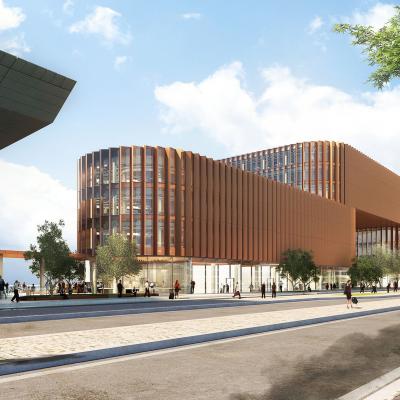
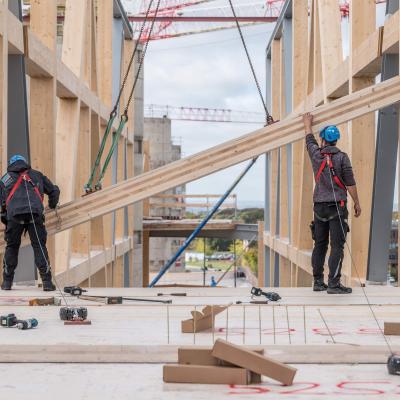
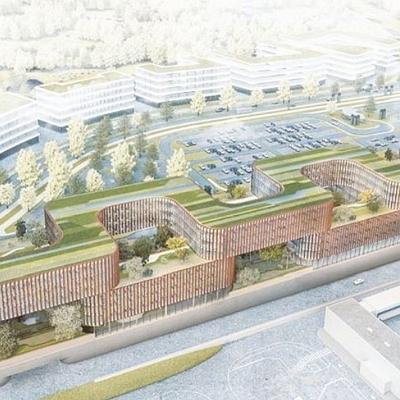
70,000 square metres of floor space. Seven storeys built in structural timber. A form unlike any conventional office building. The Skypark Business Center in Luxembourg stands as one of the most advanced examples of sustainable mass timber architecture in Europe.
Part of the Airport City Masterplan in Niederanven and designed by Bjarke Ingels Group, the complex raises a precise technical question: how can a sustainable structure be sustainably when the scale of the project makes every decision critical? In buildings of this size, sustainability is closely tied to resource control, material selection, and the ability to maintain structural and environmental performance throughout the entire life cycle.
Hybrid system and strategic use of materials
From ground level up to the sixth floor, the structure of the Skypark Business Center is built using CLT and large timber elements, while the basement levels are constructed in reinforced concrete. This combination of materials follows a performance-based logic: each is used where it delivers the best balance between structural capacity, durability and environmental impact. It is precisely this approach that defines sustainable architecture: reducing the use of high energy-intensity materials where they are not needed, and making the most of engineered timber to achieve measurable advantages in terms of weight, assembly time and reduced greenhouse gas emissions.
A significant share of environmental impact, in fact, comes from the embodied carbon in materials, as well as their production and site logistics. Using CLT as the primary system for the above-ground levels allows this impact to be substantially reduced. However, the project goes one step further: it is not enough simply to replace raw materials – their use must also be optimised. Reducing thicknesses, controlling waste, simplifying connections and speeding up assembly all become key parameters. It is at this stage that sustainability translates into the technical efficiency of the construction system.
SHARP METAL: dry connections for optimising floors in CLT
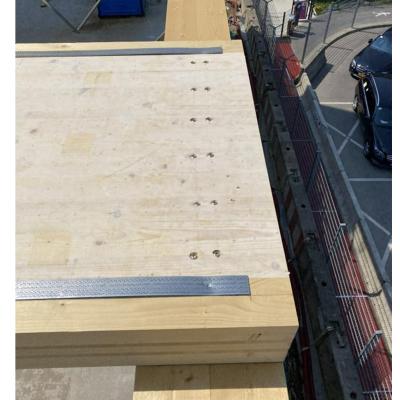
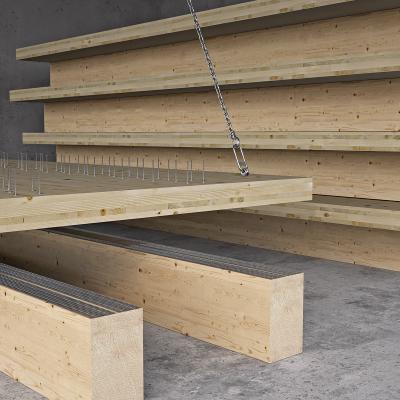
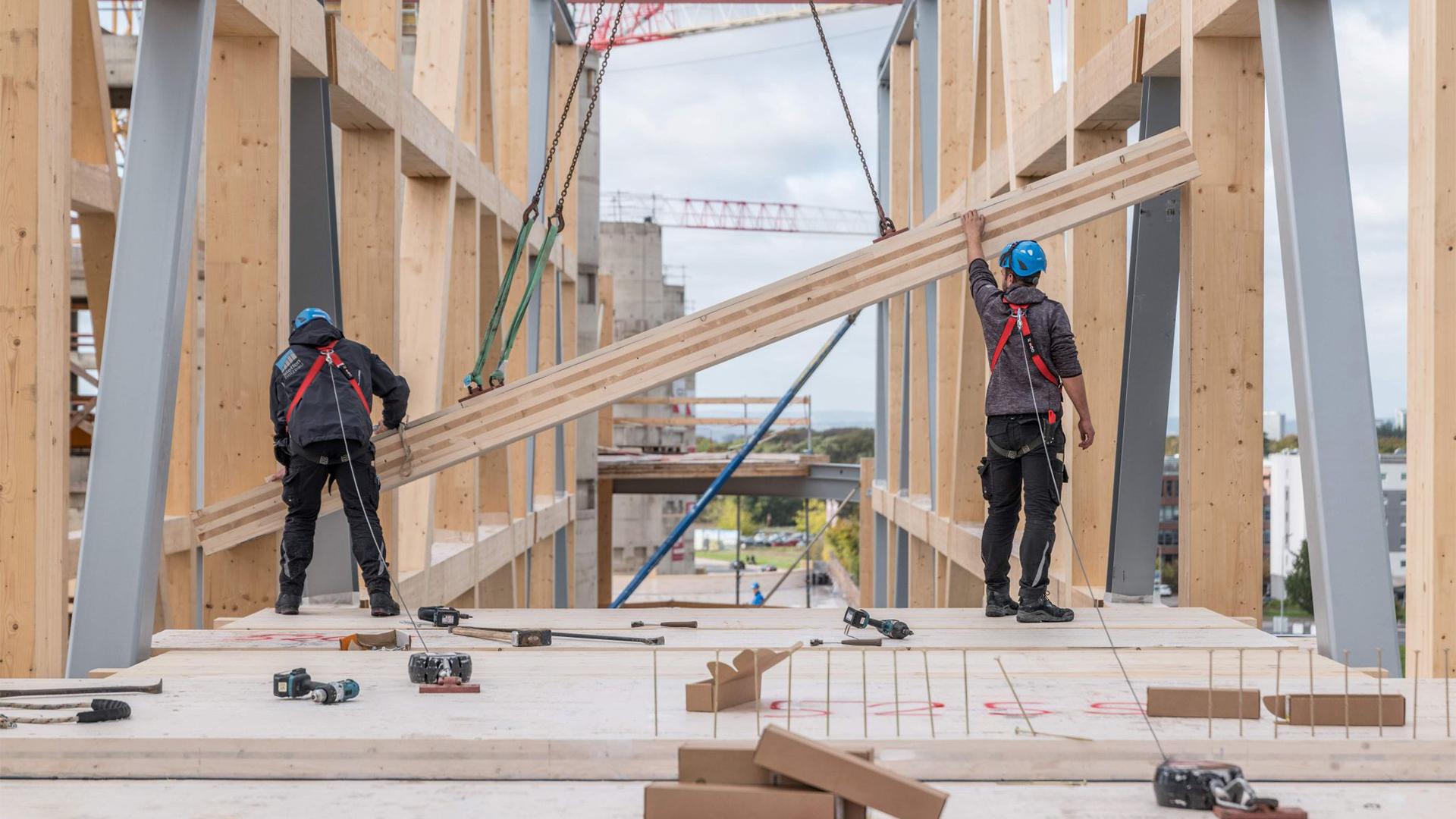
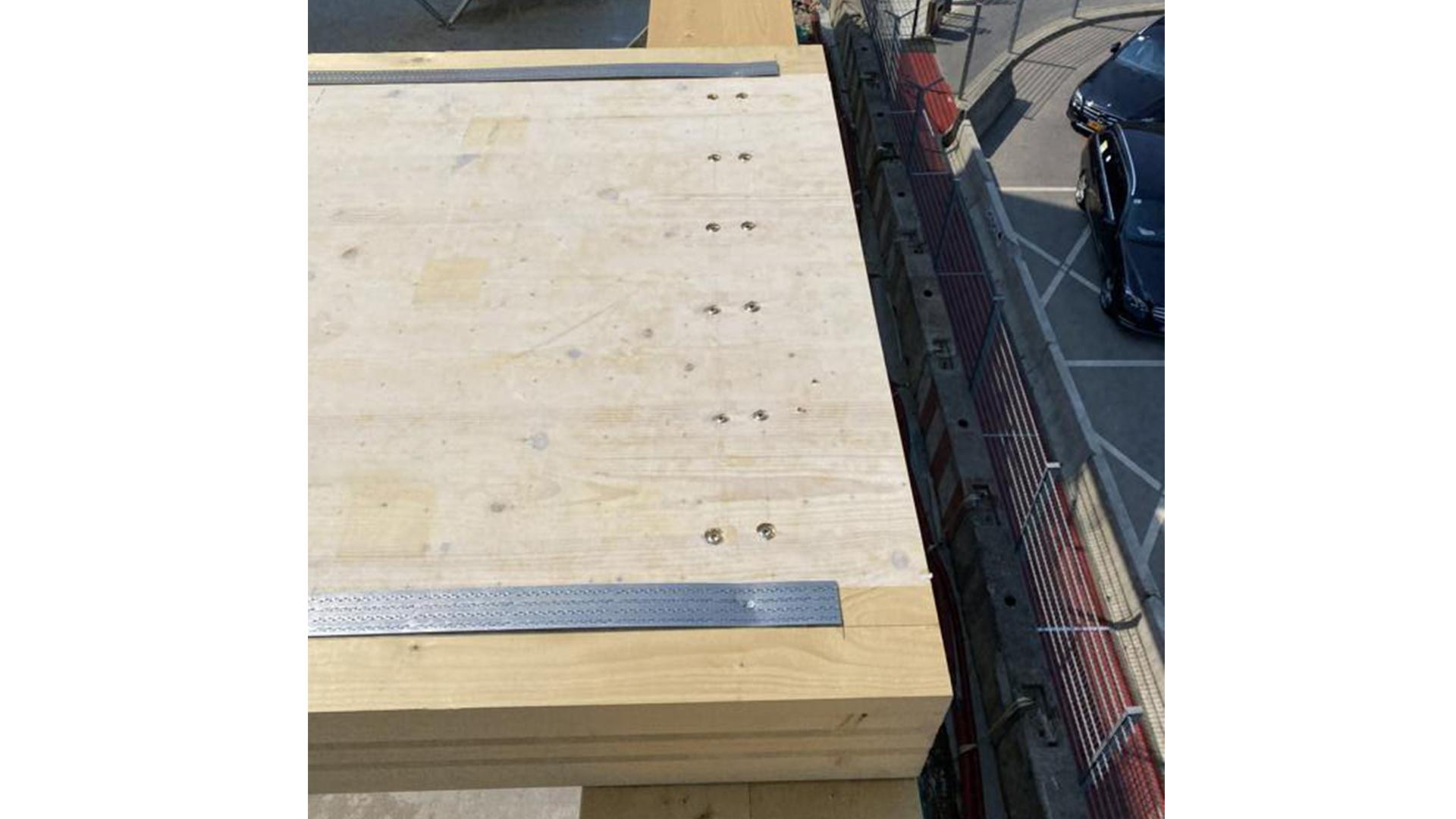
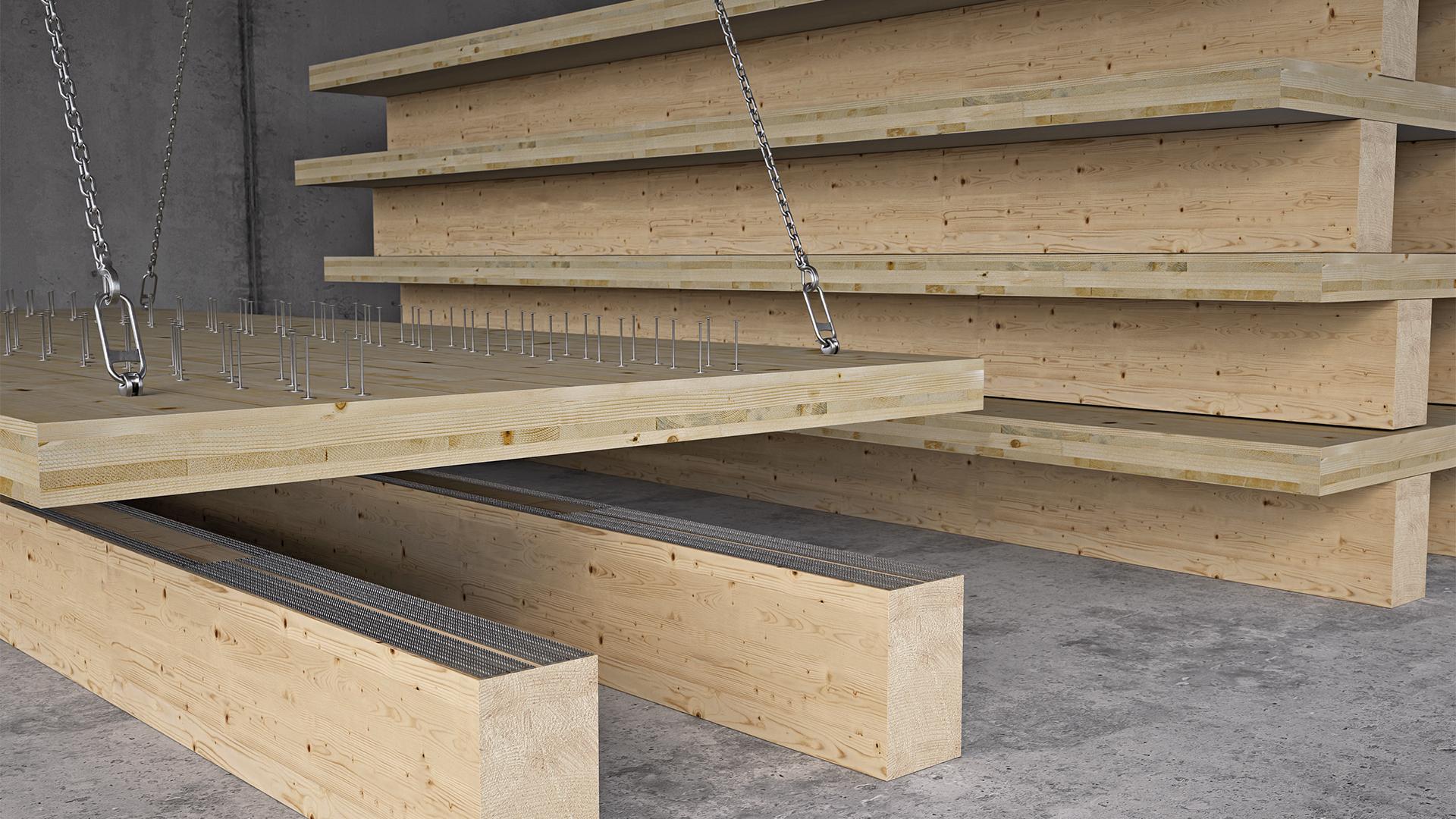
In the Skypark Business Center project, one of the key contributors to structural efficiency is the use of SHARP METAL in floor connections. The CLT panels are installed in two overlapping layers and connected at the joint by a thin steel plate with opposing hooks. Once inserted between the elements and subjected to pressure, the plate creates a mechanical interlocking connection, without the use of adhesives.
The principle behind SHARP METAL is that of dry bonding:
no waiting time for polymerisation;
no dependence on temperature or humidity conditions;
no complex surface preparation required.
From a structural perspective, the system also achieves high stiffness values, allowing the floor to behave as a more rigid element. The end result is twofold: on the one hand, controlled and predictable structural performance; on the other, a reduction in the volume of timber required. In a sustainable architecture project, the ability to achieve the same performance with less material is a decisive factor. SHARP METAL operates precisely at this level: it optimises the connection to improve the overall efficiency of the building.
Geometry, building envelope and green roofs: key elements of green building
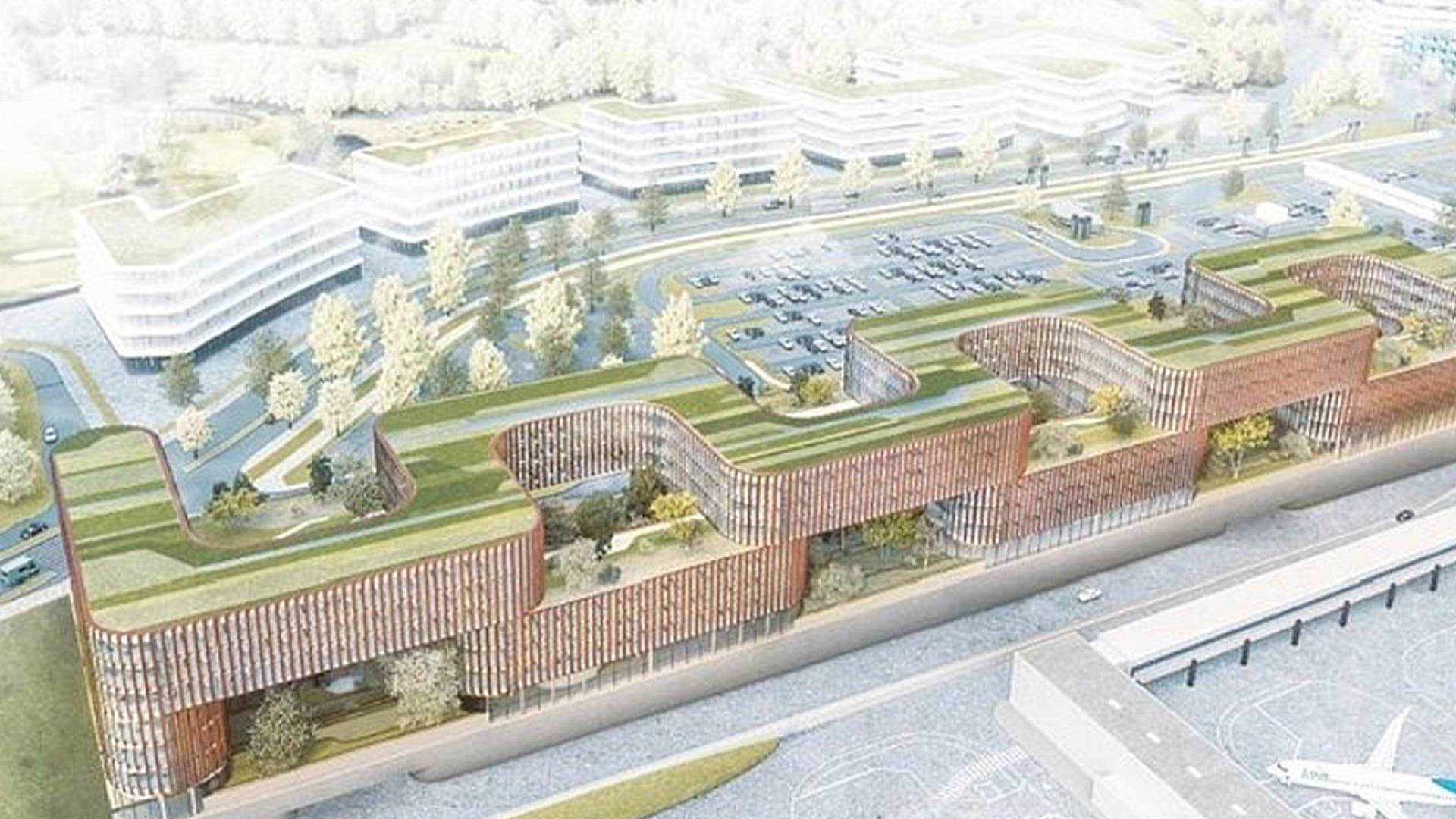
The building’s distinctive character stems from the overlap of two rotated timber volumes, arranged in a zigzag configuration to create green terraces, striking internal courtyards and spaces with differing environmental conditions. Rather than a purely stylistic exercise, this geometry responds to very real constraints: managing natural light, ensuring quality views and controlling airport noise. The undulating configuration, in fact, acts as an acoustic barrier, directly contributing to the overall performance of the building system.
Within this framework, the building envelope plays a central role in regulating environmental performance. The double façade system combines an outer layer that protects against wind and noise with an inner layer of triple glazing, designed to ensure thermal and acoustic insulation. Maintaining airtightness, controlling moisture and ensuring long-term durability therefore become essential operational conditions for preserving the structure’s performance.
The roofs of the Skypark Business Center are not secondary elements but rather active components of the environmental system. The three levels of green roofs help mitigate the urban heat island effect, regulate rainwater run-off and improve the local micro-climate. At the same time, they introduce planted surfaces that enhance biodiversity in a highly infrastructural context. Integration with photovoltaic panels completes the system, enabling the roof to serve both energy-generating and environmental functions. The building’s upper surface thus becomes an integral part of the overall green building strategy.
Sustainable architecture as an operational model
The Skypark Business Center shows that sustainability in large-scale CLT construction depends on a carefully coordinated system. Connections, materials, building envelope and geometry work together to reduce environmental impact while maintaining high performance.
In projects of this scale, every technical choice directly affects timelines, resource use and the building’s behaviour. The Luxembourg project offers a practical benchmark: designing with engineered timber means integrating every component of the construction system into a coherent, verifiable and replicable framework. A practical model for a more environmentally responsible approach to construction.
Find out more about the advantages and applications of SHARP METAL and explore all dry connection solutions for structural timber and building envelopes on the official website.
Reprodução reservada
Technical Details
- Companies:
- Bjarke Ingels Group, LuxAirport, AuCARRE
- Country:
- Luxembourg
- Produtos:
- SHARP METAL