



Modular timber construction: an event boat in Brazil combining boatbuilding tradition, prefabrication and Rothoblaas connections
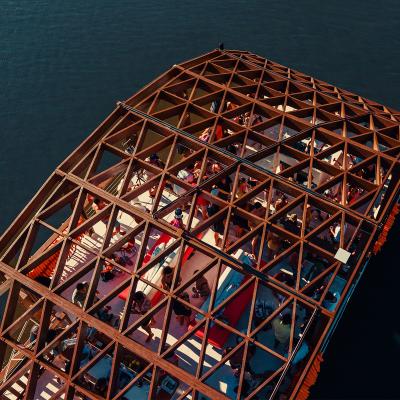
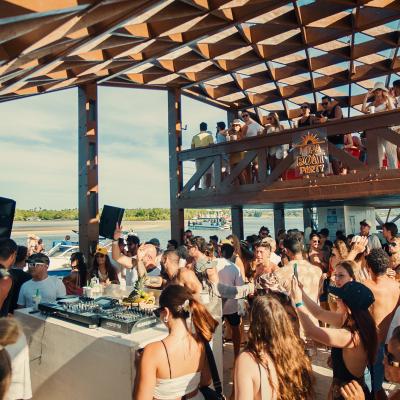
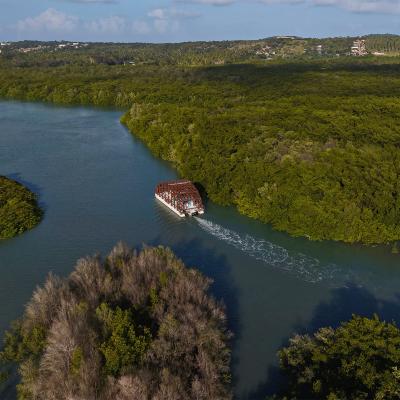
One of the most striking locations on Brazil’s north-eastern coast is Lagoa das Guaraíras, a lagoon shaped by a history of transformation. For centuries, this body of fresh water remained separated from the ocean, until the devastating floods of 1924 permanently swept away the sandbank that divided it from the sea. Since then, the lagoon and ocean have coexisted in a unique equilibrium that has transformed the landscape, the ecosystem and even the identity of the local community of Tibau do Sul, a name that means “between two waters” in the language of the indigenous Potiguar people.
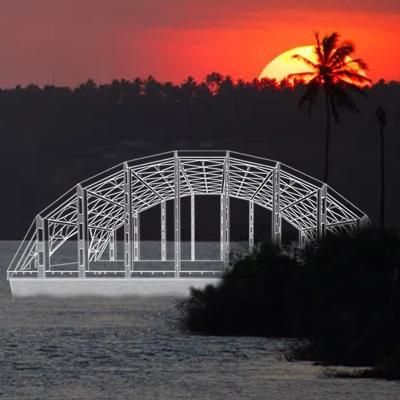
Just a few degrees from the Equator, this location also offers a rare natural spectacle. On full-moon nights, the sun sets in the west at almost the same moment as the moon rises from the Atlantic in the east. Two celestial bodies 180 degrees apart are reflected on the water, creating an extraordinary spectacle of light, colour and movement.
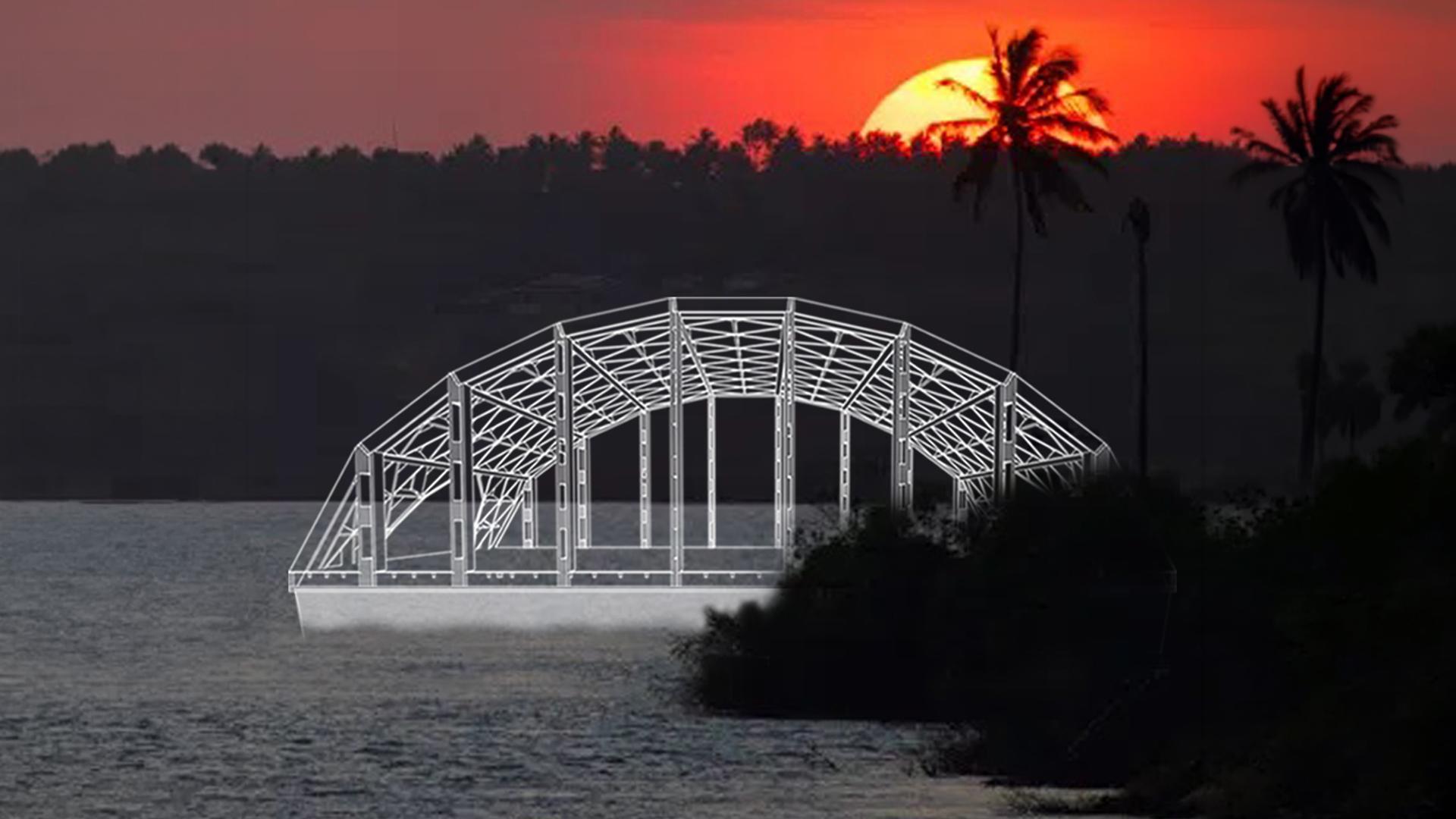
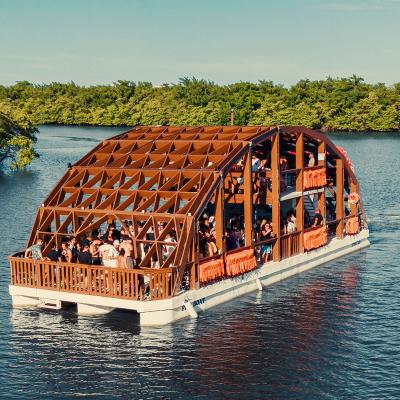
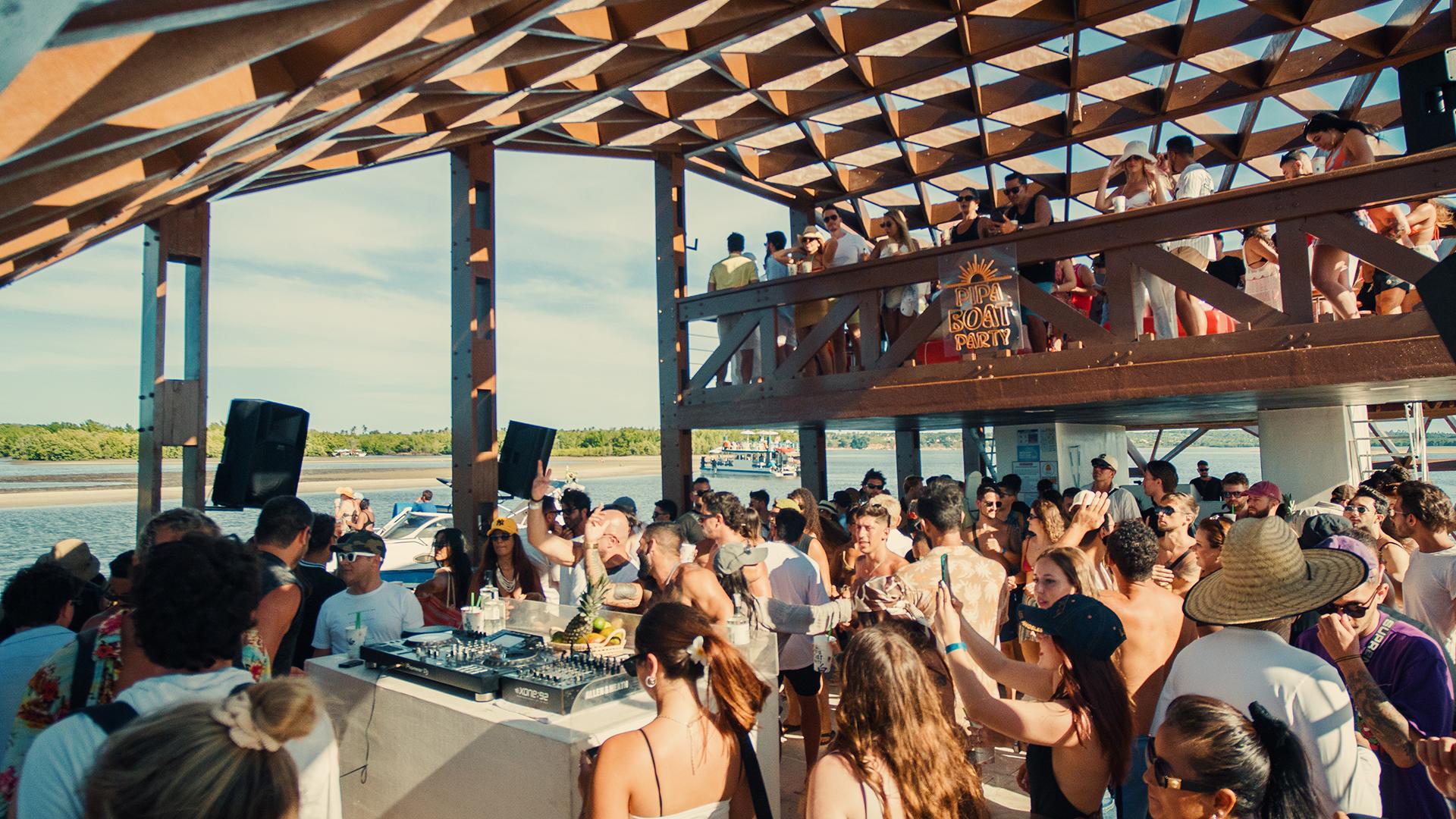
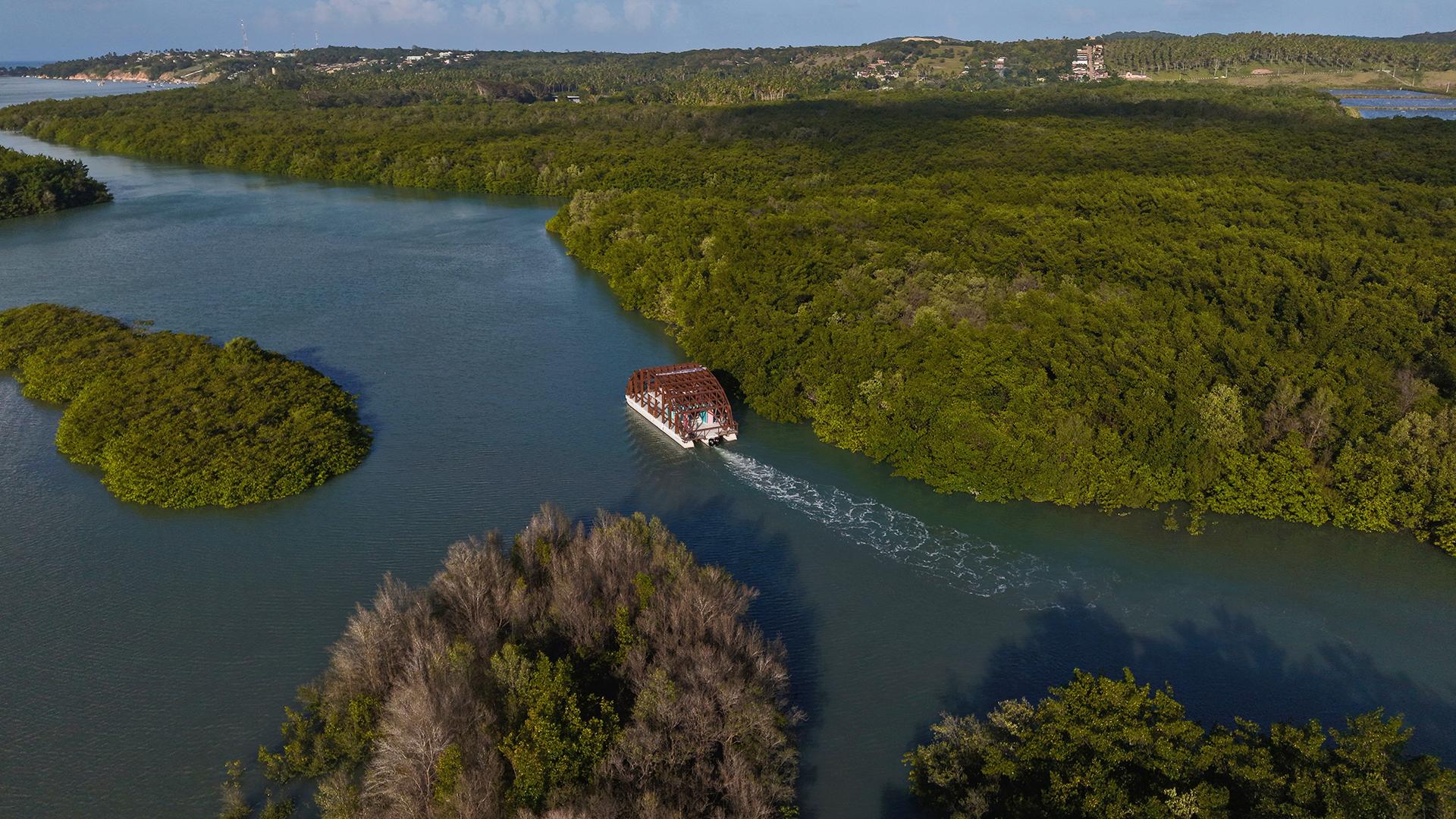
It was this particular combination of geographical and astronomical conditions that inspired the Modular Timber Boat, an example of modular construction designed by Spanish architect Daniel Florez. A floating structure for events that translates the dialogue between the sun, moon and horizon into architecture: “Its circular form,” explains Florez, “evokes three perfect spheres that seem to emerge from and disappear into the water, transforming a natural phenomenon into an immersive spatial experience.”
Modular Timber Boat: where tradition and innovation meet
While the concept draws inspiration from the landscape, the construction strategy stems from the local production context. North-eastern Brazil lacks an advanced industrial supply chain for the production of large prefabricated structures. By contrast, it has a strong tradition of woodworking and boatbuilding, passed down through generations of carpenters and shipyards. The challenge for the project team was therefore to combine a contemporary approach to prefabrication with the skills and tools typical of a predominantly craft-based environment. This need gave rise to the concept of “craft industrialisation”: a production system that applies the principles of modular and standardised construction while making the most of local expertise and materials available in the region.
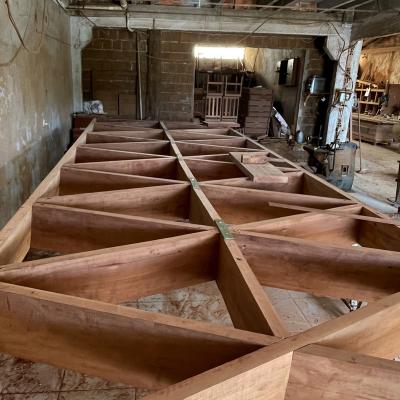
The entire production process was organised across two separate locations. At a sawmill around 15 km from the final site, the timber structural modules, beams and columns were manufactured. At the same time, at a shipyard some 250 nautical miles away, specialist workers produced the fibreglass catamaran hulls that would subsequently support the structure. Once completed, the components were transported to the final site for assembly.
A modular structure in Massaranduba, a high-density tropical timber
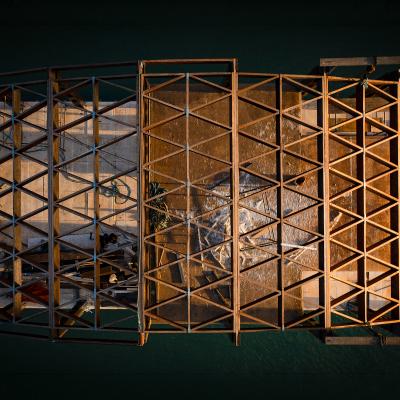
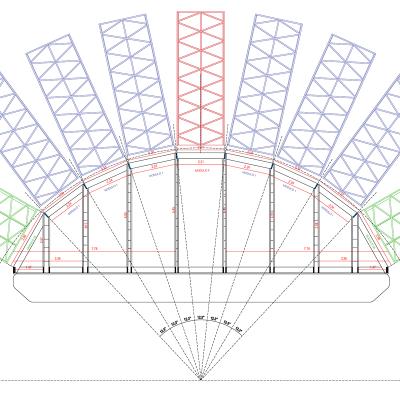
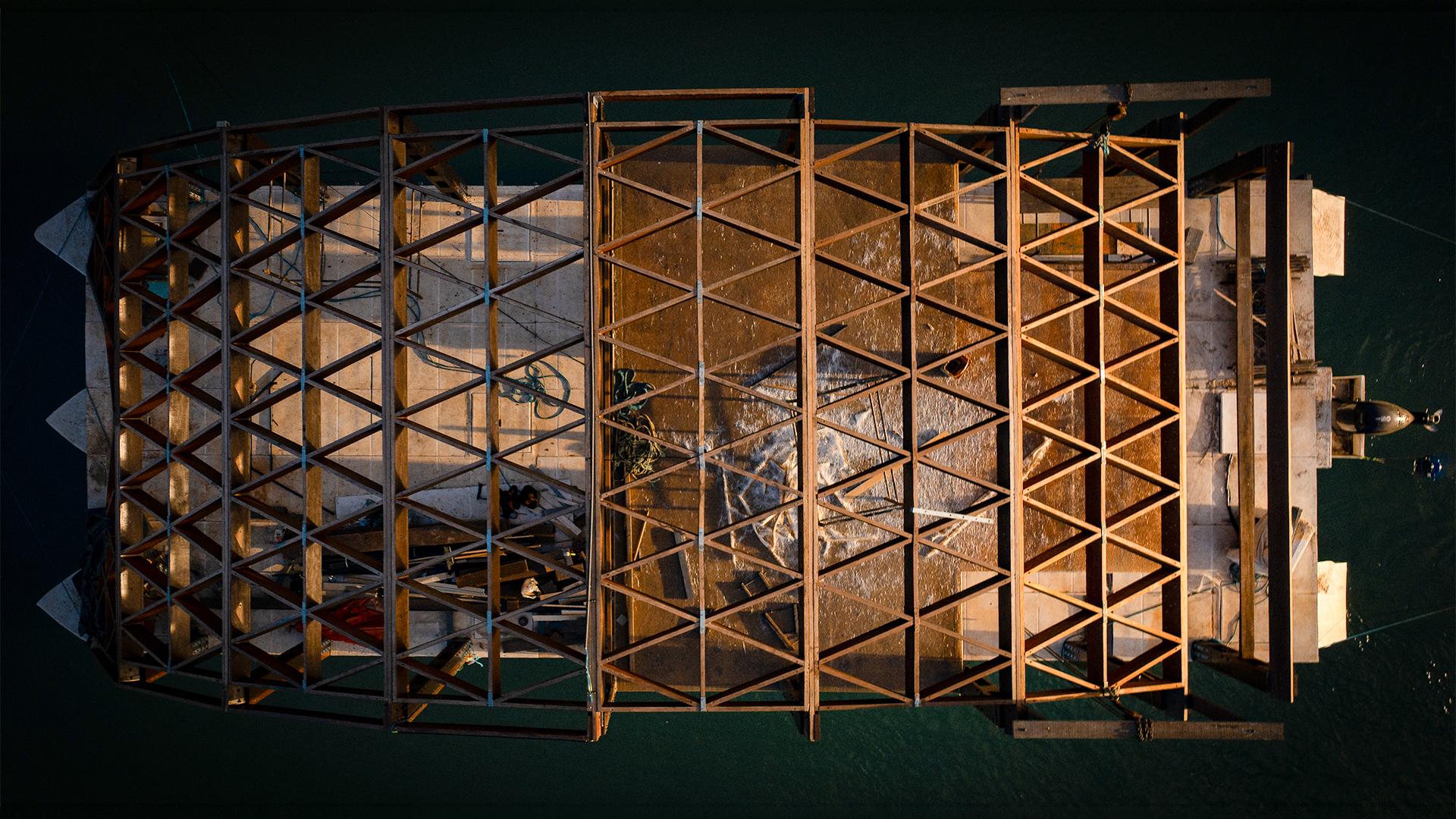
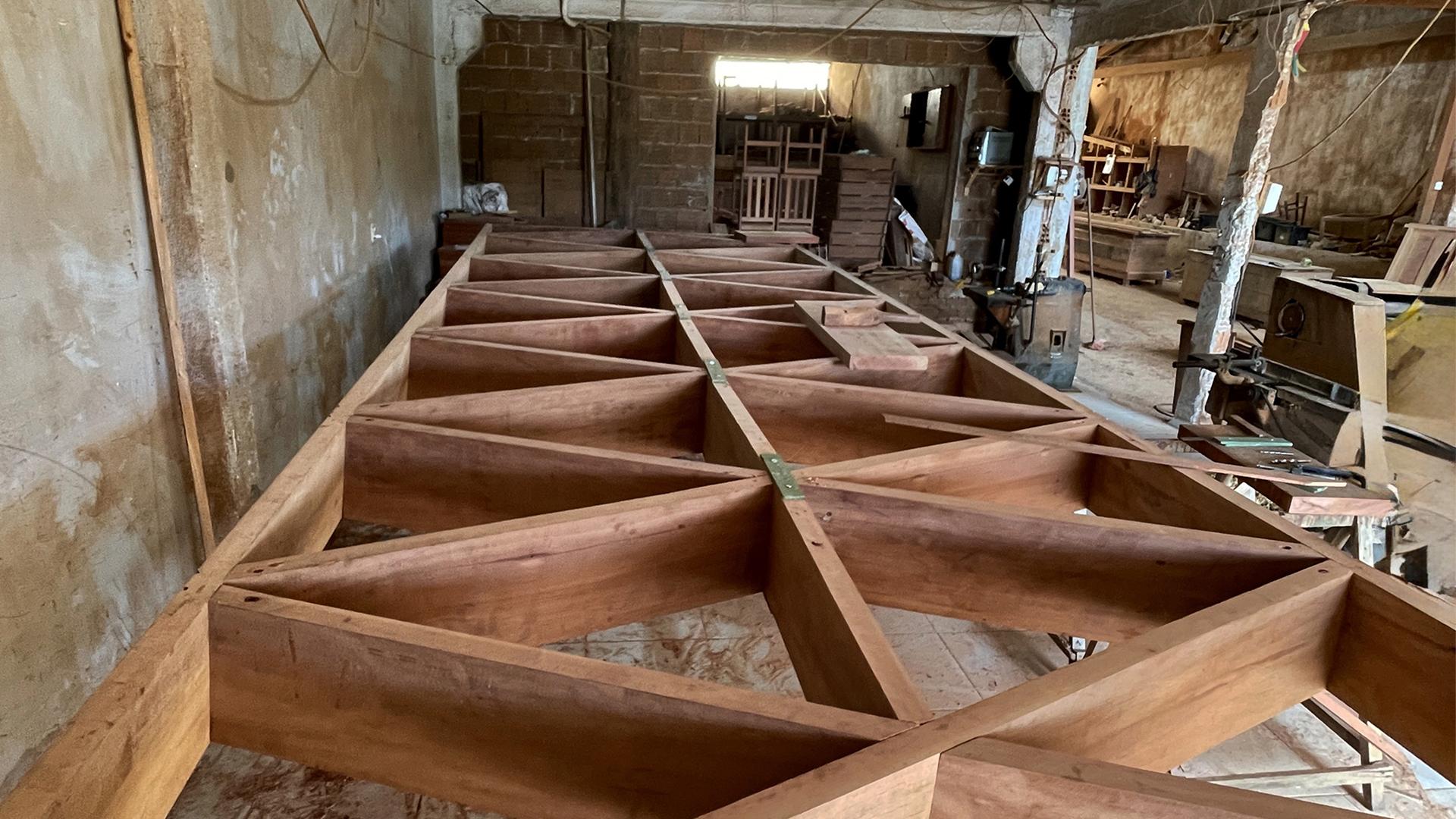
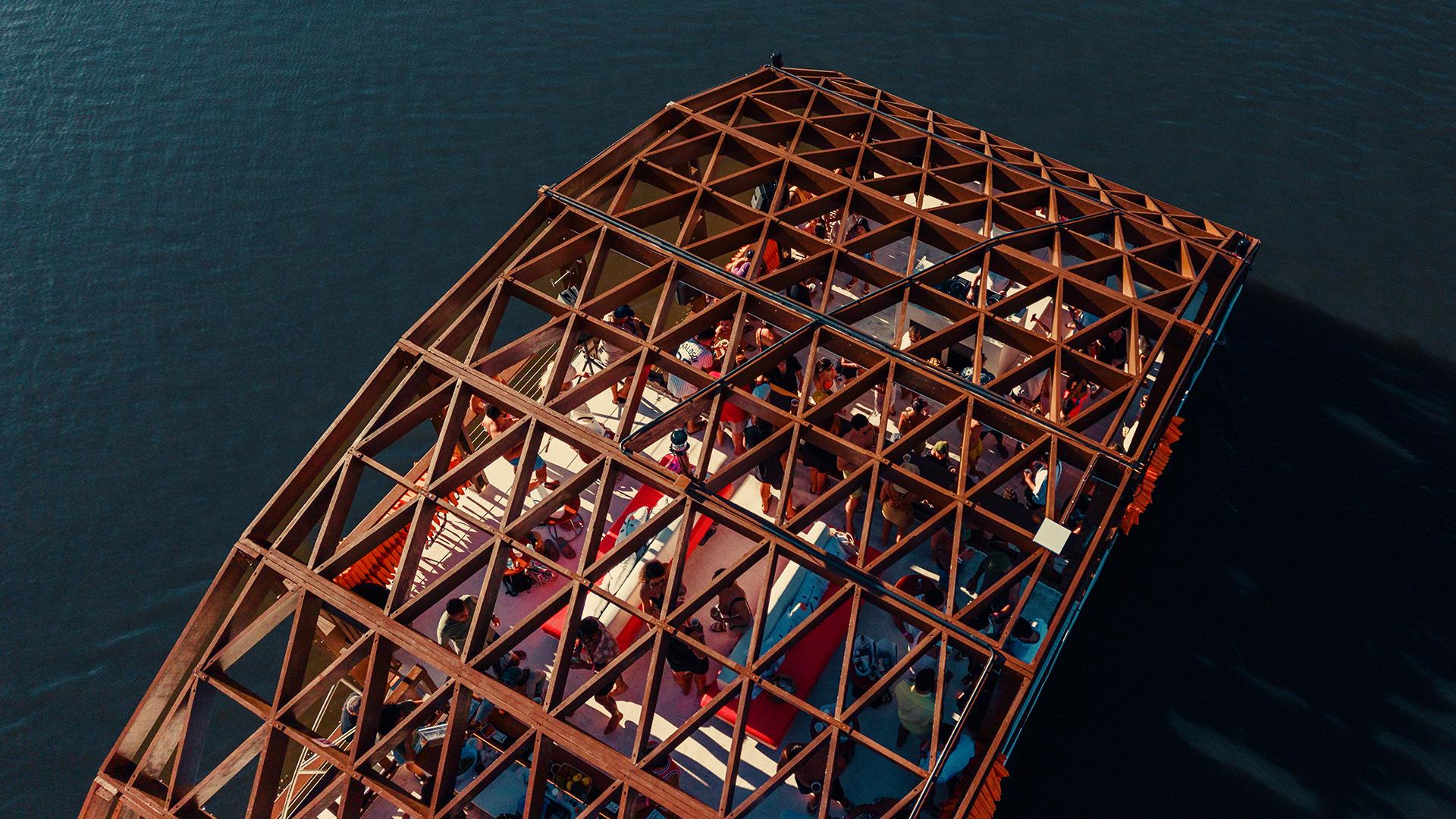
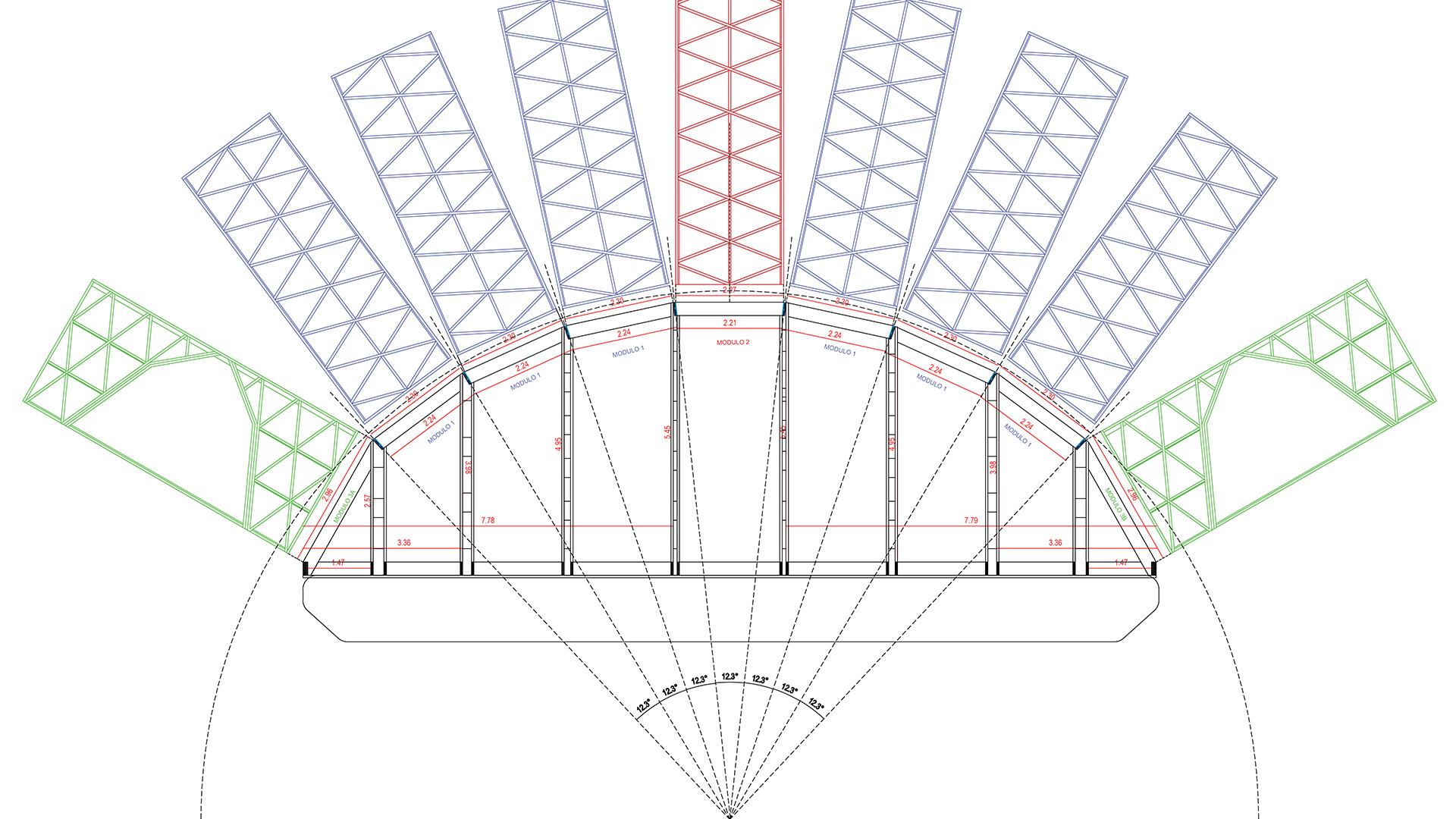
At the heart of the project is a roof comprising eleven large prefabricated triangular modules. Each module weighs more than 1,100 kg and is made from Massaranduba, an Amazonian tropical timber particularly valued for its high density, durability and resistance to weathering. This timber species was selected to ensure good performance in an environment constantly exposed to intense sunlight, humidity and salt-laden air. The triangular geometry allows loads to be efficiently distributed while creating a distinctive architectural effect. The modules filter the natural light, creating shaded, intimate spaces and transforming the structure into an ideal setting for events and gatherings against the backdrop of the Brazilian lagoon.
The engineering challenge: designing in a craft-driven environment
For Everaldo Pletz, who was responsible for the structural engineering, the main challenge was not the structural calculations themselves, but actually building the structure in a setting far removed from the typical conditions of industrialised production. The structure combines complex three-dimensional geometry, large prefabricated elements, extremely dense tropical timbers and assembly in a remote location in north-eastern Brazil. Every design decision therefore had to take into account not only structural performance, but also transport methods, site logistics, assembly sequences and the management of on-site operations.
Modularity certainly played a key role. The repetition of the triangular elements reduced the risk of errors during production, simplified transport and accelerated final assembly.
The Rothoblaas connections that made the project possible
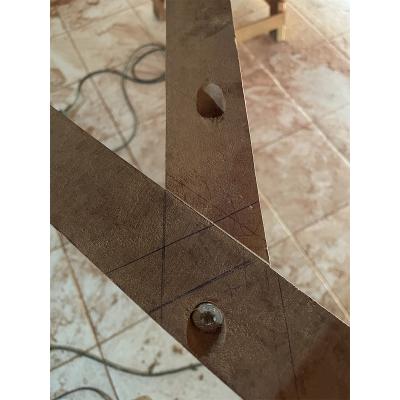
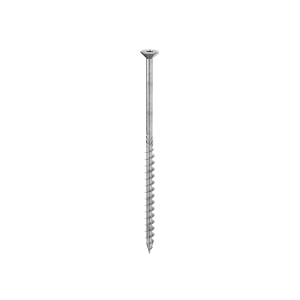
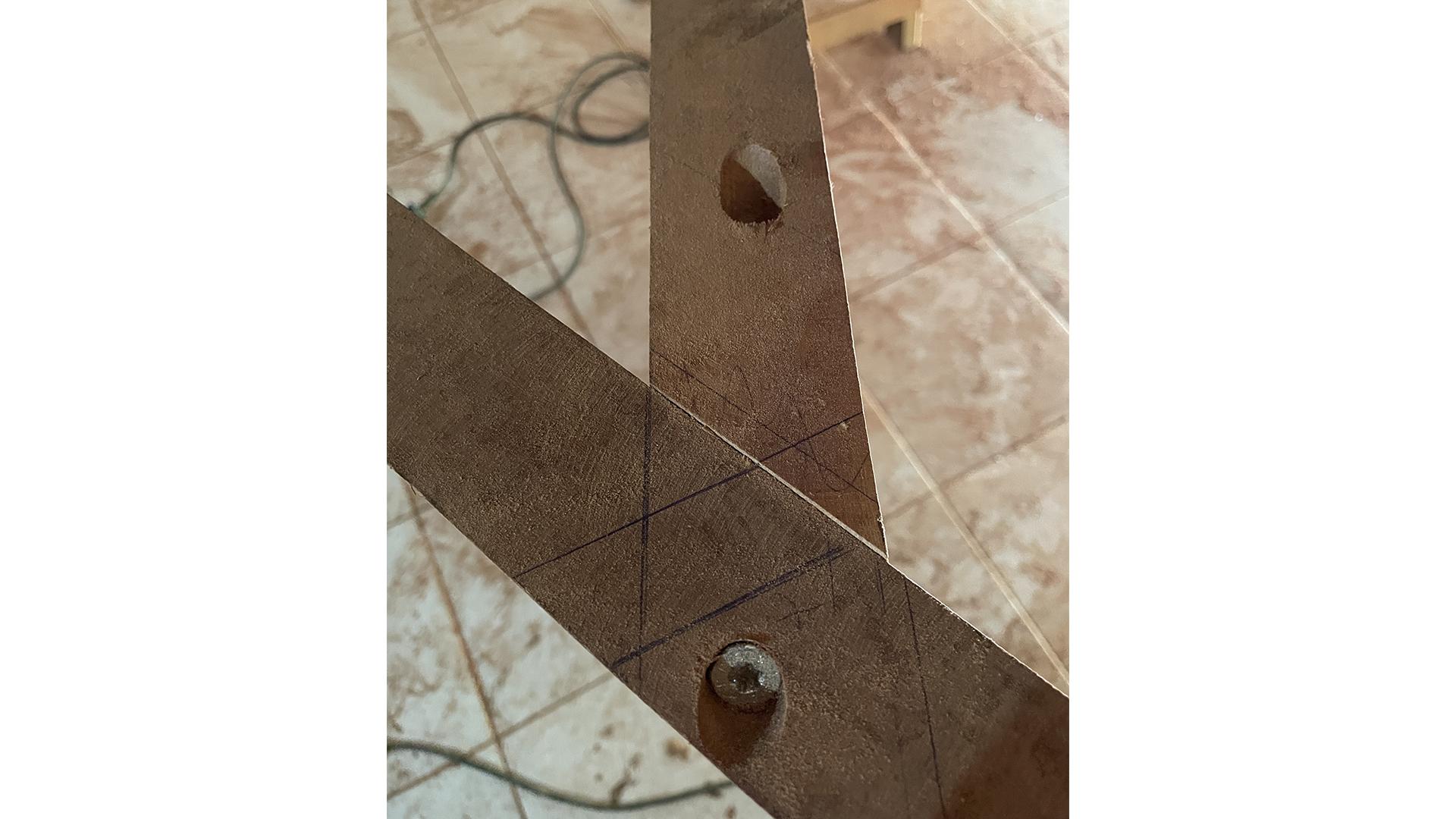
To tackle the challenges posed by a modular structure made from Massaranduba, one of the densest and most durable raw materials used in construction, Florez and Pletz’s team relied on an integrated system of Rothoblaas connections. Among these, HBS PLATE EVO screws played a key role. They were specifically developed for timber-to-steel connections and are particularly suited to outdoor applications thanks to their special 20 μm multilayer C4 EVO coating. The distinctive under-head geometry and optimised thread allow these screws to deliver high shear and tensile performance, distribute stresses more effectively across the metal plate and provide greater durability even in exposed environments. This is essential for a floating structure designed to operate in conditions characterised by humidity, salt-laden air and a highly variable climate.
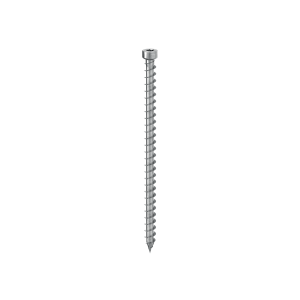
The main connections were also supported by VGZ full thread screws, approved for structural applications even in high-density timbers. Their full thread and cylindrical head ensured effective load transfer and rigid, precise connections, making them particularly suitable for concealed joints, structural reinforcement and assemblies subject to high loads. Finally, HBS screws helped speed up assembly operations thanks to their high penetration capacity and certified performance even in high-density timbers, enabling local tradespeople to create reliable, repeatable connections throughout every stage of assembly.
From technology to knowledge transfer
One of the most interesting aspects of the project was the collaborative process that developed on site. Many of the craftspeople involved had extensive experience in traditional boatbuilding but had never worked with this type of structural fastening system. The introduction of Rothoblaas connections therefore involved an initial period of training.
“Perhaps the most remarkable aspect of the project,” explains engineer Pletz, “was introducing these fastening systems to local craftspeople who had never used this technology before. Even the most experienced tradespeople had to learn an entirely new approach to connections. After this brief training period, assembly became surprisingly fast and accurate, demonstrating how advanced engineering solutions can be successfully integrated with traditional craftsmanship.”
“The project is a practical example of technology transfer,” adds Pletz, “showing how modern fastening systems can expand the capabilities of local builders while preserving regional construction traditions.”
The result extends beyond the individual project, demonstrating the value of bringing together technical innovation, on-site training and traditional skills deeply rooted in the local area.
*Photo credits: images courtesy of Daniel Florez, project architect.
Reprodução reservada